
The Surprising Power of a Metronome: How Rhythm Supports Emotional Regulation
By Alyssa Davis, COTA/L
Children who struggle with emotional regulation often experience the world as unpredictable, fast, or overwhelming. Their bodies may move too quickly, their emotions may escalate suddenly, or their attention may drift without warning. For many of these children, the underlying challenge isn’t simply “big feelings”—it’s difficulty with timing, sensory processing, and motor coordination, all of which are essential for staying regulated.
One simple but powerful therapeutic tool can help strengthen these foundational skills: a metronome.
Whether it’s a basic auditory beat or a structured digital system like Interactive Metronome (IM), rhythm-based interventions can help children build the neurological timing skills that support emotional regulation. Below is a deep dive into why metronomes work, what the research says, and how we can use them effectively.
🧠 Why Timing Matters for Emotional Regulation
Emotional regulation is not just a psychological skill—it’s a sensorimotor one. To stay calm, organized, and flexible, children rely on:
- Predictable motor output
- Efficient sensory processing
- Coordinated movement
- Attention and working memory
- Inhibitory control
These abilities depend heavily on temporal processing, the brain’s ability to perceive, predict, and respond to timing cues. Temporal processing is supported by brain regions including:
- The cerebellum (coordination, timing, error correction)
- The basal ganglia (motor sequencing, inhibition)
- The prefrontal cortex (executive functioning, emotional regulation)
When timing is inefficient, children may appear:
- Impulsive
- Easily frustrated
- Dysregulated
- Inconsistent in movement
- Distractible or inattentive

🎧 How a Metronome Supports Regulation
A metronome provides a steady, predictable beat that acts as an external timing cue. This rhythmic anchor helps children organize their movements, attention, and internal state.
Key benefits
- Improved sustained attention Staying on the beat requires focus and error monitoring.
- Enhanced impulse control Children learn to wait, pace, and respond at the right moment.
- Reduced motor variability Consistent movement patterns support calmer body regulation.
- Strengthened temporal processing Better timing supports reading fluency, speech production, and coordinated movement.
- Predictability = safety A steady beat provides structure, helping children feel more grounded.
📚 What the Research Says
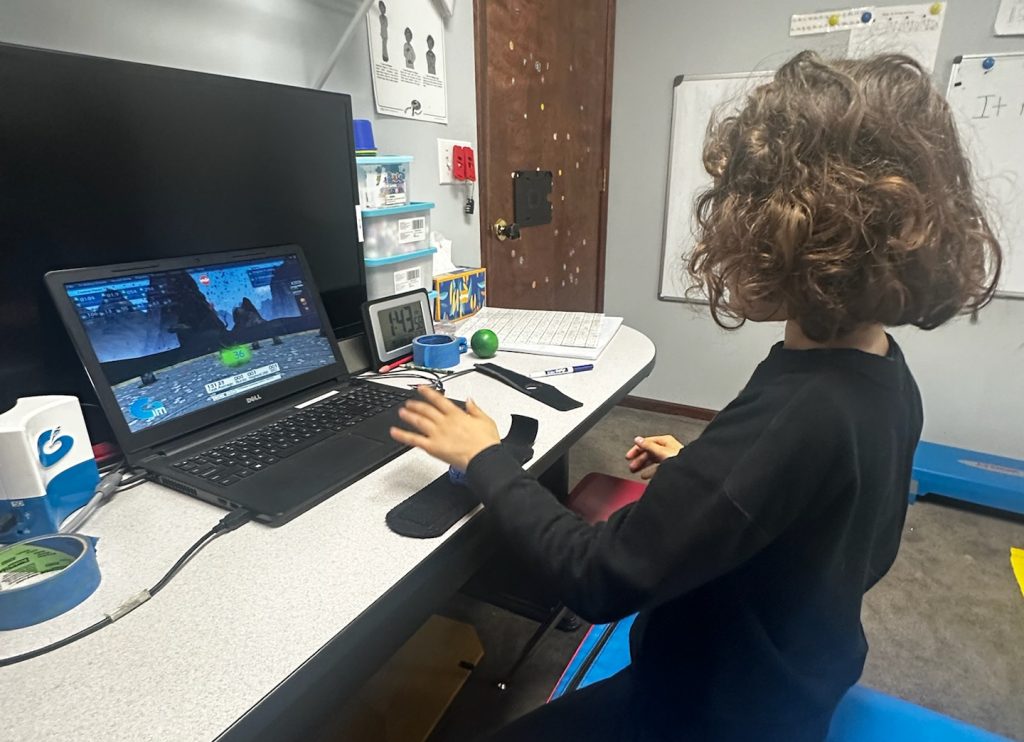
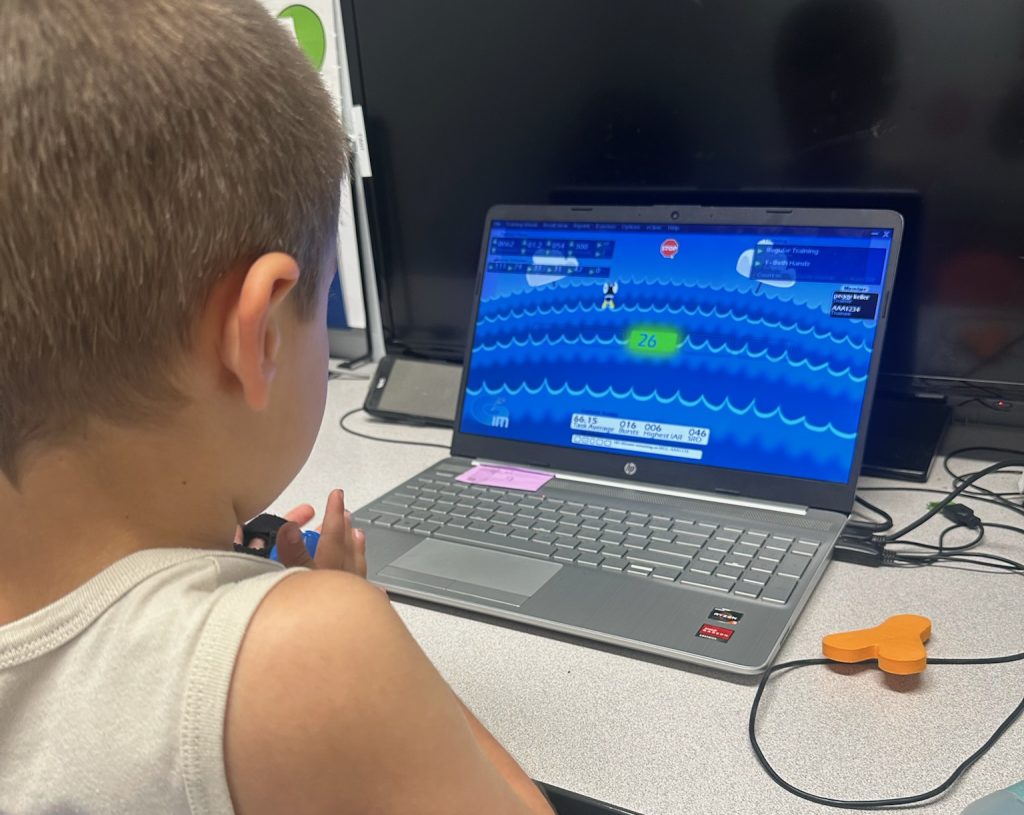
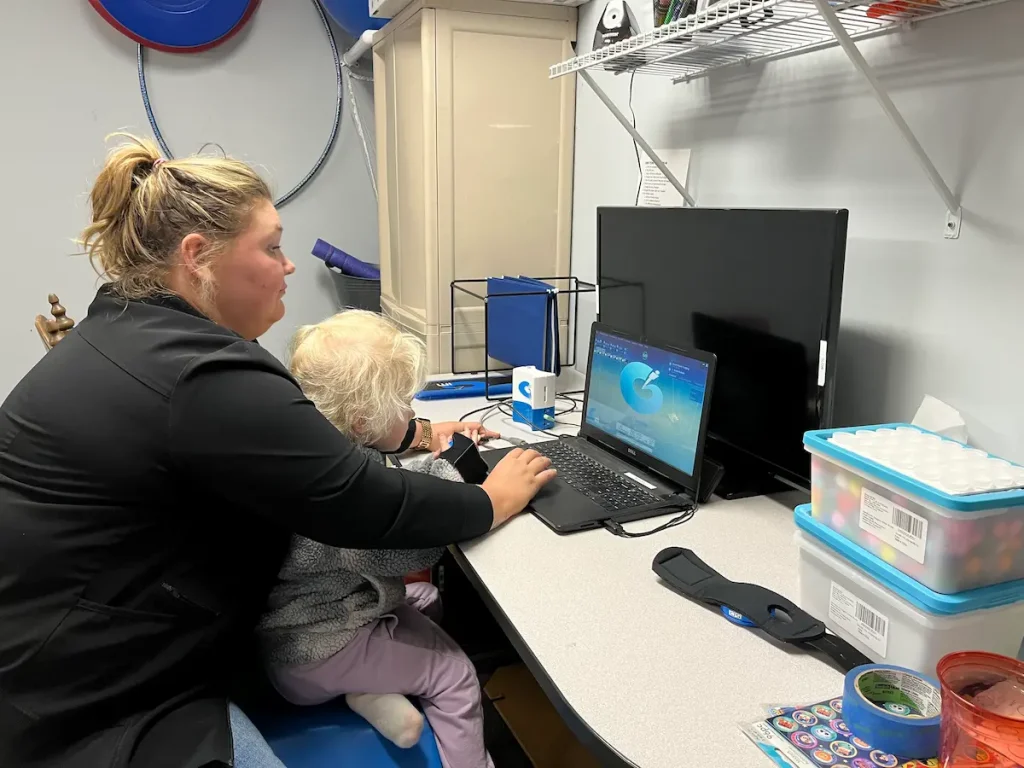
Research on Interactive Metronome (IM) and rhythm-based interventions shows promising outcomes for children with ADHD, autism, sensory processing disorder, and learning differences.
Key findings
- IM training improves timing accuracy, attention, working memory, and self-regulation.
- Studies show improvements in motor coordination, processing speed, and executive functioning after metronome-based training.
- Rhythm-based interventions support speech timing, reading fluency, and motor sequencing, all of which contribute to emotional regulation.
🛠️ Practical Metronome Activities for Emotional Regulation
- Rhythmic hand tapping Children tap hands or rhythm sticks to the beat, practicing pacing and impulse control.
- Movement sequencing Step, jump, or clap in patterns aligned with the metronome to strengthen motor planning.
- Breathing with a metronome Inhale for four beats, exhale for four beats to support calm-down routines.
- Brain breaks with rhythm Short metronome-guided movement breaks help reset attention and regulation.
- Dual-task activities Combine cognitive tasks (naming animals, spelling words) with beat-based movement to strengthen executive functioning.
🌱 How Metronome Work Supports Emotional Growth
As timing improves, children often show:
- Better frustration tolerance
- More consistent behavior
- Improved transitions
- Greater flexibility
- Increased confidence
- Enhanced ability to “pause” before reacting
These gains translate directly into daily life—school routines, peer interactions, homework, and family activities.
A metronome is far more than a rhythmic tool—it’s a neurological training device that helps children develop the timing, attention, and motor consistency needed for emotional regulation. When integrated thoughtfully into pediatric occupational therapy, metronome-based activities can help children feel more grounded, organized, and in control of their bodies and emotions.
Contact us today to learn more, schedule an evaluation, or just talk it through. We’re here. And we’re listening. Learn more at pktherapyot.com or call us at 785-594-2909.