

The Harsh Reality of Screen Time and A Child’s Development
By Dr. Radie Hain, OTD, OTR/L
A Developmental Perspective
Screens are part of modern childhood, they are everywhere — tablets, TVs, phones, and computers. While technology can be helpful, many parents wonder: How much screen time is too much? But really parents should be asking, what do screens alter in the developmental process?
Yes, they help us connect, learn, and stay entertained—but they also quietly replace many of the experiences children’s brains need the MOST during the years when development happens fastest and the most crucial.
Technology is great when used appropriately and in moderation, specifically with children. It is important for families to understand how early development works, so screen use does not interfere with the most crucial time to support foundational development.
Research continues to show that excessive screen exposure—especially early, passive, and unsupervised viewing—can impact foundational sensory, language development, motor skills, attention, sleep, self and emotional regulation that children rely on for learning and participation (Madigan et al., 2022; Sher, 2022).
As pediatric occupational therapists, we are not anti-technology—we are strongly pro-development. When focusing closely on how each children learns best, the answer almost always comes back to one thing: play and movement. Let’s break down screen time versus play time and how they affect development—and how to find a healthy balance.
To better understand why this happens, it helps to understand how the brain develops first.
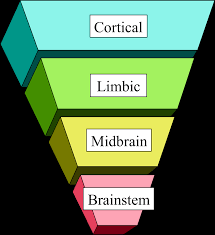
How the Brain Builds Skills: A Simple Developmental Hierarchy
Think of development like building a house—strong foundations support everything that comes later.
Level 1: Brainstem (Foundation for Regulation & Safety)
Supports:
- sleep–wake cycles
- arousal levels
- body regulation
- reflex integration
- basic sensory processing
This system develops through:
movement, rhythm, deep pressure, predictable routines, and caregiver connection.
Level 2: Cerebellum (Movement & Coordination Center)
Supports:
- balance
- posture
- coordination
- timing
- motor planning
- attention readiness
This system develops through:
climbing, spinning, crawling, jumping, and active play.
Level 3: Midline Systems (Communication Between the Two Sides of the Brain)
Supports:
- bilateral coordination
- crossing midline
- visual tracking
- reading readiness
- handwriting foundations
This system develops through:
two-handed play, crawling patterns, throwing/catching, drawing, and building.
Level 4: Frontal Lobes (Thinking & Learning Skills)
Supports:
- attention
- emotional regulation
- impulse control
- organization
- problem solving
- executive functioning
Why This Matters for Screen Time
Screens primarily activate higher-level thinking systems, but children’s brains develop from the bottom up. Young children learn through–– movement, touch, exploration, interaction, and play. These experiences stimulate the: vestibular system (movement and balance), proprioceptive system (body awareness and strength) and visual system (tracking and coordination) which help stimulate higher-level systems. When foundational systems are strengthened early things like attention, coordination, regulation, posture, visual processing, executive functioning and classroom learning become easier later.
This is why occupational therapy focuses so strongly on foundational sensory-motor development. When screens replace sensory experiences, movement and interaction, during early childhood, children miss opportunities to strengthen these systems during critical windows of development. Research shows children with higher daily screen exposure are more likely to demonstrate developmental vulnerabilities in communication, social skills, emotional maturity, and physical development (Madigan et al., 2022).
From a developmental perspective, this is not surprising. The brain builds through experience—and screens reduce opportunities for those experiences. When children spend long periods watching or swiping, their bodies and brains aren’t getting the sensory input they need to grow strong connections such as; climbing, manipulating objects, interacting with caregivers, pretend play, movement through space, and sensory exploration. Screens often replace these opportunities rather than supporting them.

Motor Development Requires Real-World Practice
Fine motor skills develop through––grasping, stacking, building, drawing, cutting, manipulating tools and toys––not tapping and swiping.
Emerging research continues to show associations between higher screen exposure and concerns in fine motor development during early childhood. Longitudinal research with preschool-aged children found that greater screen media use predicted weaker fine motor skills over time, even after accounting for age, working memory, vocabulary, and family factors (McHarg et al., 2022). Additionally large population-based developmental screening research further demonstrates that increased screen time in early childhood is associated with poorer developmental outcomes overall, including motor-related areas along with communication skills, and social participation that contribute to school readiness and functional participation (Madigan et al., 2022; Kerai et al., 2022).
From an occupational therapy perspective, early motor foundations support:
- handwriting readiness
- visual-motor integration
- bilateral coordination
- posture and endurance
- classroom participation
Screen Time Impacts Attention, Sleep, and Regulation
Sleep disruption alone can significantly effect, executive functioning, emotional regulation, memory, attention, sensory processing, and classroom readiness. But adding higher levels of screen exposure during early childhood can be associated with shorter sleep duration, later bedtimes, reduced physical activity increase the effects of disrupted sleep more.
Research suggests these effects may occur because extended screen use—especially before bedtime—can interfere with the brain’s natural sleep rhythms and routines, reduce opportunities for movement-based learning, and limit the real-world experiences children rely on to develop attention and self-regulation skills (Dai & Ouyang, 2025). Studies have also shown associations between increased screen time and attention difficulties in preschool-aged children, as well as links between screen exposure and behavioral and emotional regulation challenges, particularly when screens are used frequently or as a coping strategy (Madigan et al., 2022; Lakicevic et al., 2025; Jusienė et al., 2025).
Large national survey research involving more than 50,000 U.S. children found that 4+ hours of daily recreational screen exposure was associated with higher likelihood of: anxiety, depression, behavioral concerns, and ADHD symptoms. These associations were partially mediated by reduced physical activity and disrupted sleep patterns (Dai & Ouyang, 2025). Again–this aligns closely with what occupational therapists observe clinically.
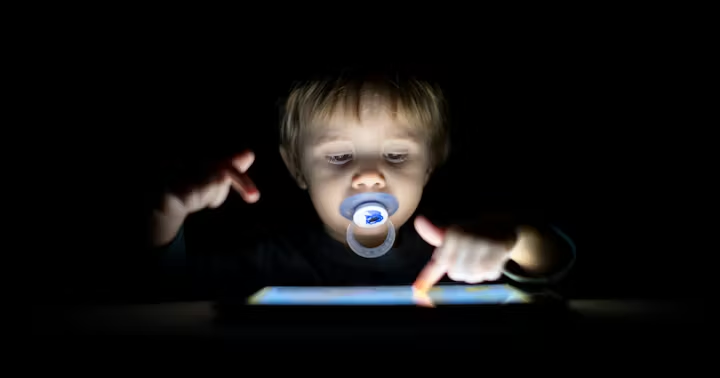
The Chemical Effects of Screen Time on a Child’s Brain
Screen time doesn’t just change behavior—it changes what’s happening chemically in a child’s brain and body.
Dopamine (Motivation & Reward)
Fast-paced shows, games, and apps trigger large releases of dopamine, the brain’s “reward” chemical. When kids get frequent, high bursts of dopamine from screens:
- Real-life activities can start to feel boring
- Attention for non-screen tasks becomes harder
- Kids may seek more stimulation
- Transitions away from screens feel emotional or explosive
Over time, the brain expects quick rewards instead of learning patience and persistence.
Cortisol (Stress Hormone)
Overstimulating content, noise, and rapid visuals can raise cortisol, the body’s stress hormone. Elevated cortisol can:
- Increase irritability and meltdowns
- Make it harder to self-regulate
- Interfere with learning and memory
- Impact sleep patterns
Instead of calming the nervous system, too much screen use can actually keep kids in a heightened state.
Melatonin (Sleep Regulation)
Blue light from screens suppresses melatonin, the hormone that helps children fall and stay asleep. When melatonin is disrupted:
- Bedtime becomes harder
- Sleep quality decreases
- Daytime attention and mood suffer
- The nervous system doesn’t fully reset
That’s why OT’s recommend turning screens off at least 60 minutes before bed.
What Pediatric Guidelines Recommend
Under 18 months
Avoid screens except video chatting.
18–24 months
Introduce only high-quality programming with caregiver participation.
Ages 2–5
Limit screen time to about 1 hour per day of high-quality content with adult co-viewing
(American Academy of Pediatrics, 2016).
These guidelines reflect what we know about early brain development—not simply just behavior management recommendations.
Easy Ways to Increase Play at Home
Here are simple OT-approved ways to boost play time:
- Build obstacle courses with pillows and chairs
- Use playdough, Legos, or crafts for hand strength
- Go outside for biking, climbing, and running
- Do animal walks down the hallway
- Play board games for turn-taking and attention
- Encourage pretend play with toys or costumes
Even 15–20 minutes of active play makes a big impact.
If screens are used there are strategies that will help reduce addiction such as––watching together instead of independently, protecting sleep routines, keeping screens out of bedrooms, prioritizing movement before screen time, avoiding background television, and protecting daily screen-free play opportunities. Small changes make a meaningful difference.
Let’s Review: A Healthy Balance
Screens aren’t bad— but kids grow best through movement, interaction, and exploration. When play comes first, screens can become a tool instead of a habit.
But early, excessive, or unsupervised screen exposure can interfere with critical development during the years when sensory-motor systems are forming the foundation for later learning.
If you notice your child struggling with attention, coordination, behavior, or regulation, occupational therapy can help build the foundation skills they need to thrive.
Call to Action
Want more ways to support your child’s development at home or your child struggles with sensory processing and difficult behaviors and you’d like support beyond home programming, reach out to us. Pediatric OTs can help your child build skills for regulation, resilience, and joyful participation in everyday life.
Questions? We’re happy to talk with you how PK Therapy can help your child build skills for participation in everyday life. Contact us at 785-594-2909.

References:
American Academy of Pediatrics. (2016). Media and young minds. Pediatrics, 138(5), e20162591.
American Academy of Pediatrics. (2013). Children, adolescents, and the media. Pediatrics, 132(5), 958–961.
Dai, Y., & Ouyang, N. (2025). Excessive screen time is associated with mental health problems and ADHD in U.S. children and adolescents: Physical activity and sleep as mediators. National Survey of Children’s Health analysis.
Jusienė, R., et al. (2025). Emotional reactivity and behavioral problems in preschoolers: The interplay of parental stress, media-related coping, and child screen time. Children.
Kerai, S., Almas, A., Guhn, M., et al. (2022). Screen time and developmental health: results from an early childhood study in Canada. BMC Public Health.
Lakicevic, N., et al. (2025). Screen time exposure and executive functions in preschool children. Scientific Reports.
Madigan, S., McArthur, B. A., Anhorn, C., Eirich, R., & Christakis, D. A. (2022). Associations between screen use and child developmental outcomes: A population study. BMC Public Health.
McHarg, G., Ribner, A., Devine, R., & Hughes, C. (2022). Screen media are associated with fine motor skill development in preschool children. Early Childhood Research Quarterly.
Sher, J. (2022). The influence of screen time on children’s language development: A scoping review. South African Journal of Communication Disorders, 69(1).